
How to Compare Kratom Strains by Label and Lot
Decode kratom strain names, compare powder and capsule labels, and find the lab report that matches your package’s lot number.
On this page
When two kratom products have similar strain names, compare the full labels. The name helps you identify the product in a catalog. The format and ingredient list tell you what the package contains, and the lot number helps you find the lab report for the material that was tested.
What does a kratom strain name tell you?
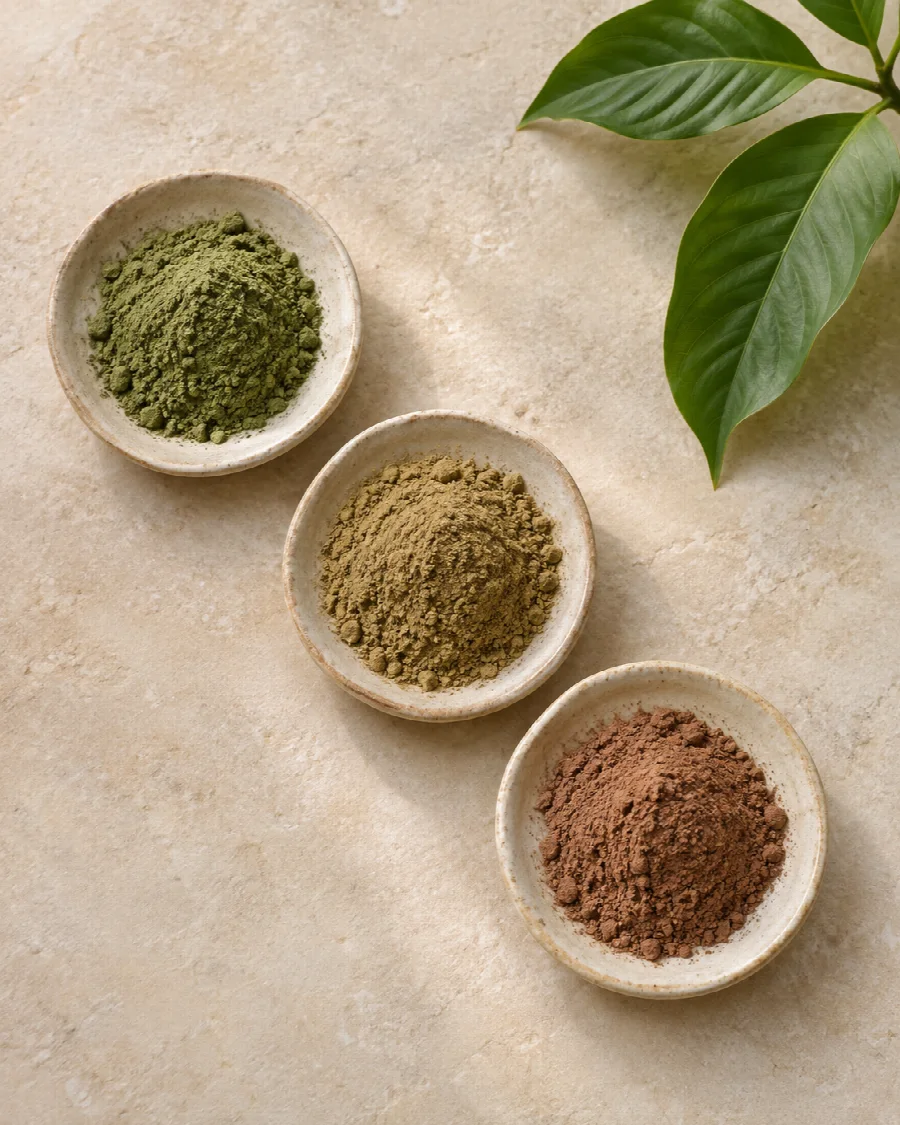
Take “Green Maeng Da Kratom Powder.” Green is the color designation, Maeng Da is the trade name, and powder is the product format. Labels may also include geographic names such as Bali or Sumatra. If you want to verify where the leaves were grown, look for a separate origin statement or ask the seller for sourcing details.
Powder appearance has its limits, too. In a 2025 study, researchers found that changing the drying conditions could produce different colors from the same batch of leaves. They also found that similar-looking powders could have different alkaloid profiles. Study of kratom processing and composition
Compare the format and ingredients
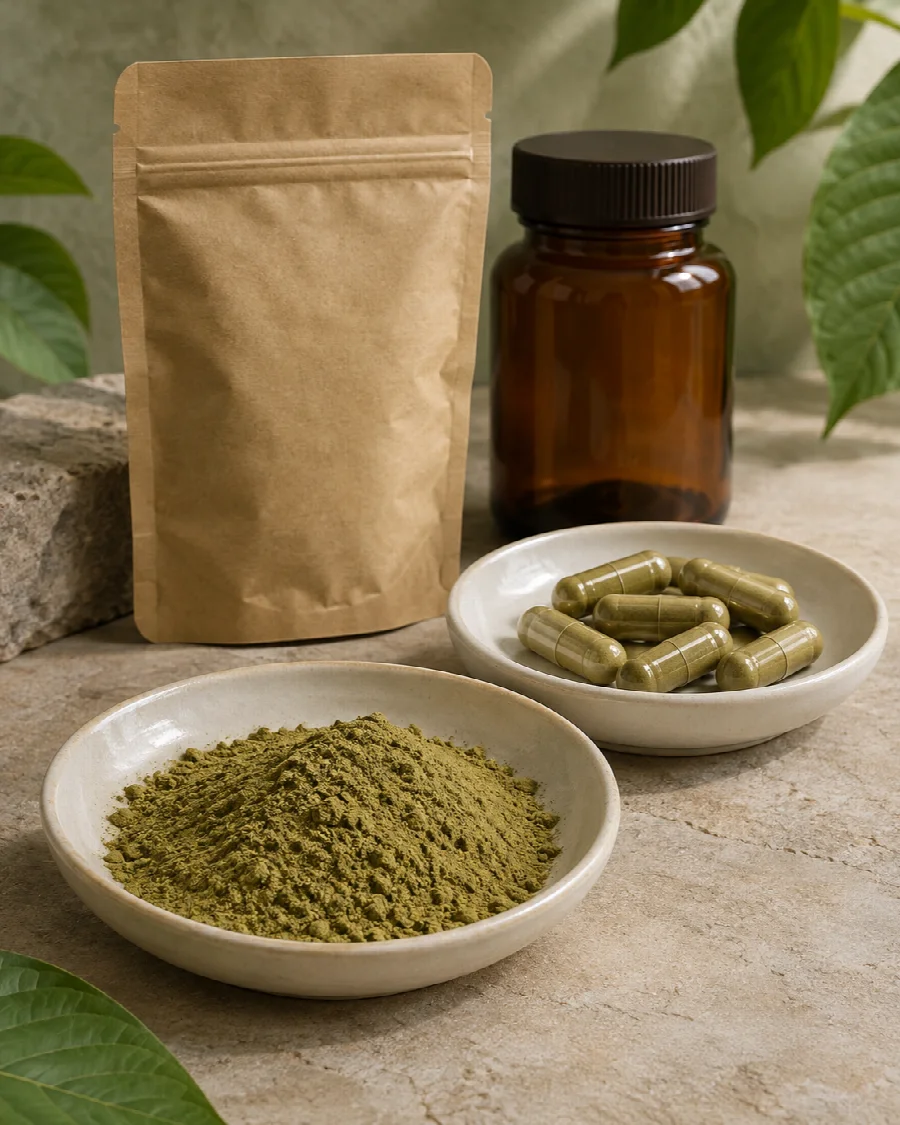
Two packages can share a strain name while listing different formats or ingredients. A powder and a capsule can both be labeled Green Maeng Da. The capsule label can also identify the shell material, and a product sold in capsule form may contain leaf powder, an extract or a blend. Read the ingredient list to see which is inside.
Check the package quantity and its unit. A capsule count tells you how many pieces are in the bottle. A weight in grams tells you how much material is in the package. For any concentration listed, check which compound it describes and whether the value is per gram or per piece before comparing.
Match each package to a lab report
- Find the full lot or batch number on each package and search it in the kratom lab report library.
- Check what was tested. Compare the lot number and read the sample description on the certificate of analysis (COA). A listing can associate one tested lot with more than one retail product. For example, our entry for lot 26082402 lists both Green Maeng Da powder and capsules.
- Compare like with like. Look for the same test, the same units and a comparable sample type. A result for a leaf powder sample and a result for a finished extract describe different materials. If you can’t confirm the lot, ask our team to help match it.
For a closer look at sample descriptions, test results and reporting limits, see our guide to reading a kratom certificate of analysis.
Can a strain name tell you how kratom will feel?
Strain names help you identify products. They provide little basis for predicting your response, and a lab report describes a sample’s composition within the scope of the tests performed. See what researchers have found in our article on reported stimulating and sedating effects.
FDA advises consumers against using kratom because of serious risks, including liver toxicity, seizures and substance use disorder. FDA safety information