
Are Kratom Strains Real? The Internet’s Never-Ending Debate
Explore what strain names can and cannot tell you, how processing and harvests vary, and why batch testing matters when comparing kratom.
On this page
If you’ve spent more than five minutes reading about kratom online, you’ve probably seen people arguing about strains.
One person says Green Maeng Da gives them energy.
Another says it helps them relax.
Someone else claims all strains are fake marketing.
So what’s the truth?
Like most things in the kratom world, the answer is more complicated than a simple yes or no.
Why People Are Confused About Kratom Strains
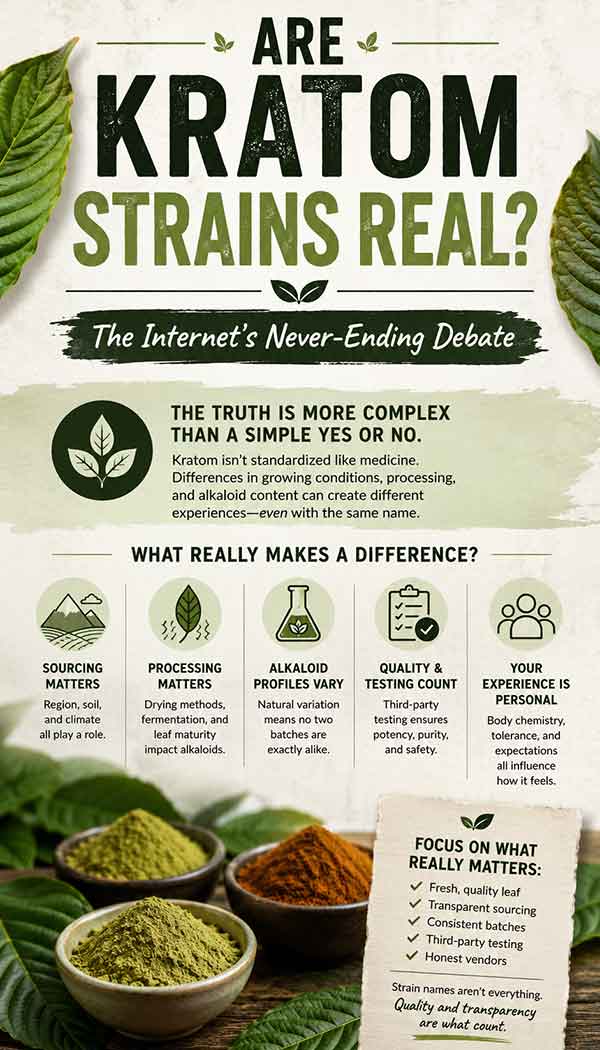
The biggest reason for the confusion is that kratom isn’t regulated or standardized like prescription medication.
There isn’t a giant laboratory somewhere creating genetically distinct “Green Maeng Da trees” and “Red Bali trees” with scientifically fixed effects.
In reality, kratom products are influenced by a huge combination of factors, including:
- Harvest season
- Soil conditions
- Drying methods
- Fermentation
- Leaf maturity
- Regional sourcing
- Blending practices
- Alkaloid composition
That means two products with the exact same name can feel noticeably different from one another.
And honestly? Internet forum users are not wrong when they point that out.
So… Are Strains Completely Fake?
Not exactly.
The names themselves are mostly industry naming conventions, but that does not mean all kratom products are identical.
Think of it more like coffee or wine.
A Colombian coffee and an Ethiopian coffee are both still coffee. But growing conditions, processing methods, roasting, and blending can create a very different experience.
Kratom works similarly.
A “Red Bali” from one vendor may have:
- different alkaloid levels
- different drying methods
- different freshness
- different sourcing
compared to another vendor selling a product with the same exact name.
That is why some people swear by certain batches while others say the same strain “does nothing.”
The Real Difference Often Comes Down to Processing
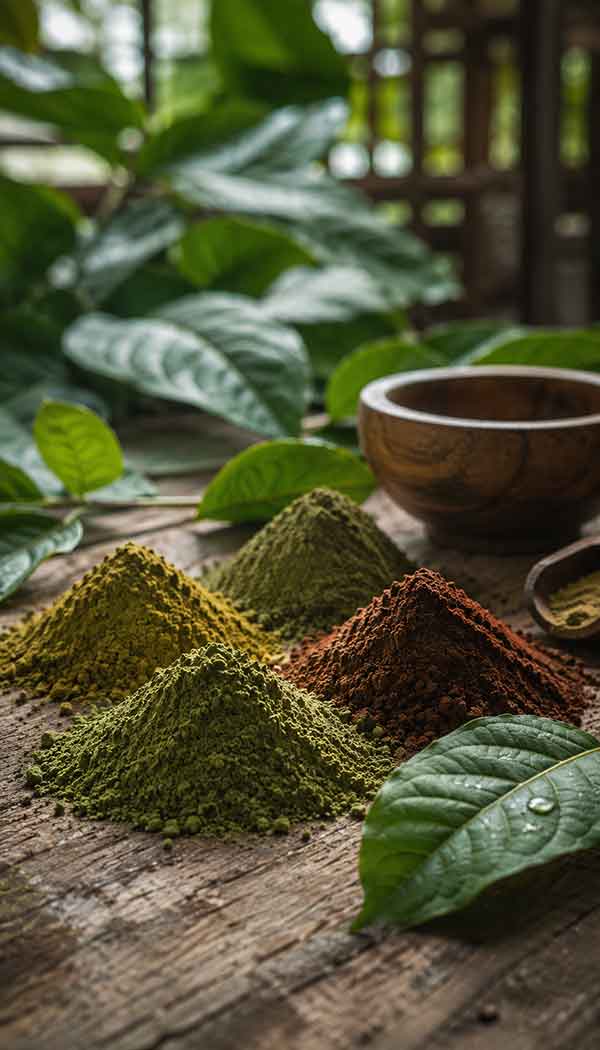
One thing many newer consumers do not realize is that drying and processing methods can significantly influence the final product.
For example:
- Some darker red powders are produced using longer drying or fermentation techniques
- Green powders are often dried differently to preserve color and alkaloid balance
- White varieties may use specific blends of leaf material or drying conditions
This is one reason color categories often feel more consistent than individual strain names.
Why Two “Green Maeng Da” Products Can Feel Completely Different
This is probably the single biggest source of frustration for consumers.
The kratom industry does not have a universal governing system that standardizes strain names across all vendors.
So:
- Vendor A’s Green Maeng Da
- Vendor B’s Green Maeng Da
- Vendor C’s Green Maeng Da
could all come from entirely different batches, regions, or suppliers.
That does not necessarily mean anyone is being dishonest. It is simply the reality of an agricultural product with natural variation.
Batch Variation Is Real
This part is important.
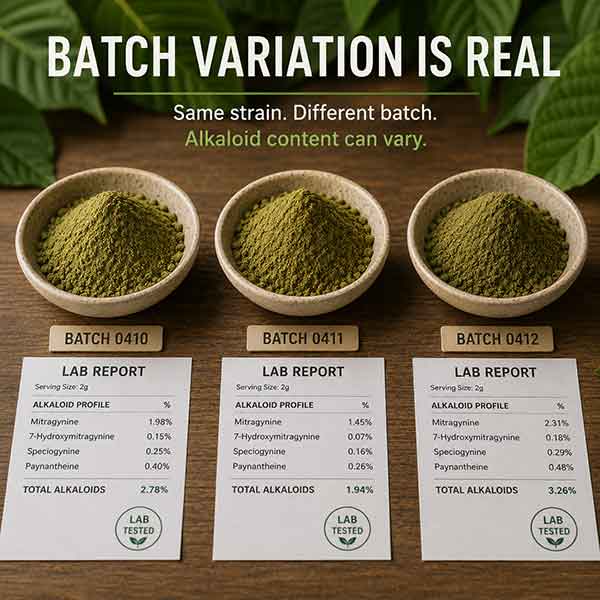
Kratom is a plant. Plants naturally vary.
Rainfall, sunlight, seasonality, soil conditions, harvesting timing, and post-harvest handling all influence alkaloid composition.
Even with strong sourcing and testing practices, no two harvests are ever perfectly identical.
That is why experienced consumers often pay attention to:
- batch consistency
- freshness
- vendor transparency
- testing practices
instead of chasing flashy strain names alone.
Why Internet Forum Users Debate About Strains Never End
The reason these arguments continue forever on the internet is because both sides are partially correct.
The “strains are fake” crowd is right that:
- strain names are not scientifically standardized
- marketing hype exists
- names alone do not guarantee effects
The “strains matter” crowd is also right that:
- processing differences matter
- alkaloid profiles vary
- some batches genuinely feel different
The problem is when people try to reduce an extremely complex agricultural product into simple black-and-white answers.
What Actually Matters More Than the Name
In our opinion, these factors matter far more than flashy strain marketing:
1. Batch quality
Fresh, properly stored kratom matters.
2. Testing
Responsible vendors should test for:
- purity
- heavy metals
- microbial contamination
- alkaloid content
3. Consistency
A reliable vendor with stable sourcing is often more important than the strain name itself.
4. Transparency
Vendors willing to provide real COAs and discuss sourcing openly tend to inspire more confidence than vague marketing claims.
Final Thoughts
So… are kratom strains real?
The honest answer is:
- the names themselves are not scientifically standardized
- but differences between products absolutely can exist
The internet often tries to oversimplify kratom into:
- “all strains are fake”
or - “every strain has magical unique effects”
Reality is somewhere in the middle.
Kratom is an agricultural product with natural variation, different processing methods, and complex alkaloid profiles. Understanding that will probably help you more than obsessing over strain names alone.