Turmeric With Kratom: What the Research Says
Turmeric and curcumin have been studied in people. Here’s what researchers have found and what remains unknown about taking turmeric with kratom.
On this page
Turmeric and curcumin have been widely studied, including in human clinical trials. Some trials have reported encouraging results with specific turmeric extracts. If you’re looking into taking turmeric with kratom, the question is different. Human research has yet to establish the safety or benefits of taking the two together.
What is the difference between turmeric and curcumin?
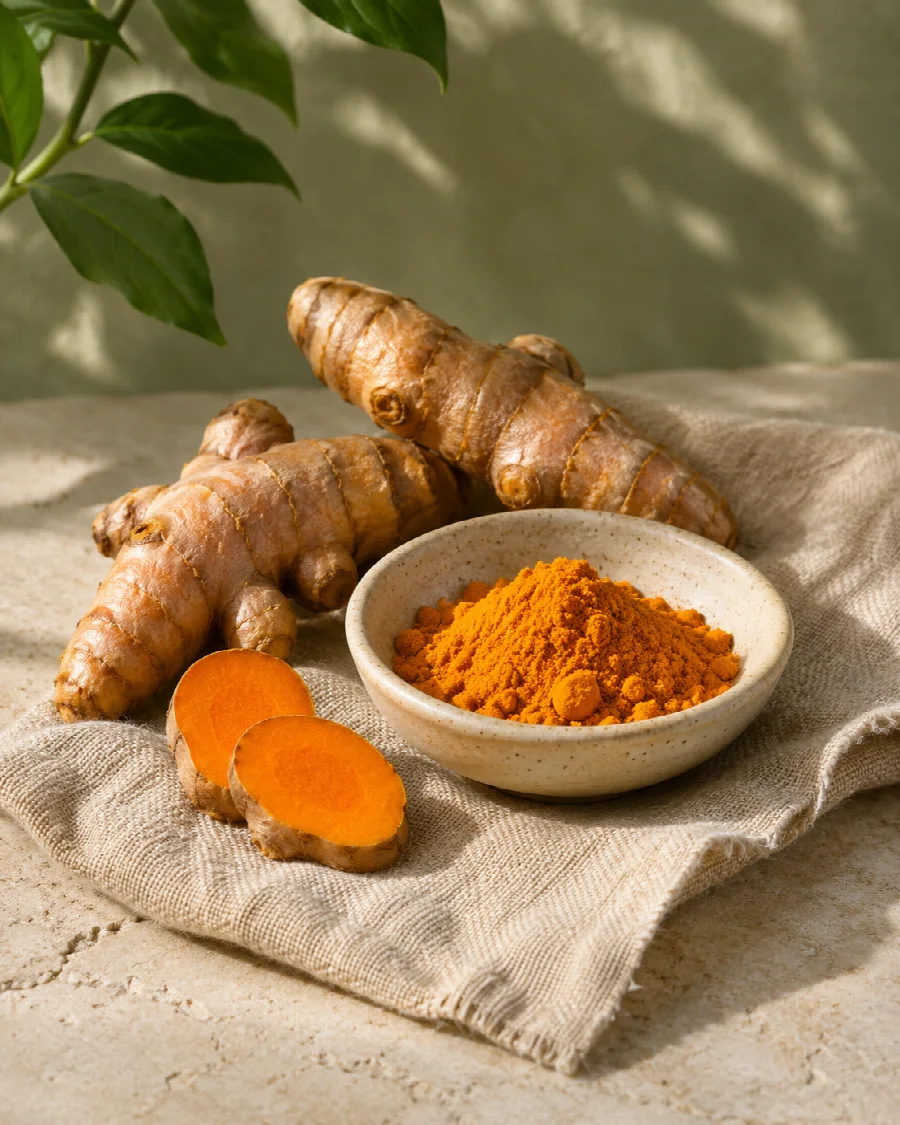
Turmeric is the golden spice made from the rhizome, or underground stem, of Curcuma longa. Curcumin is one of several compounds in turmeric and helps give it its yellow-orange color. Ground turmeric used in cooking and concentrated extracts used in clinical trials can contain very different amounts of curcumin. Formulations also differ in how much curcumin the body absorbs. NIH overview of turmeric and curcumin
What human studies have found about turmeric
Knee osteoarthritis is one area where researchers have studied turmeric and curcumin in people. In a 12-week randomized trial of 70 adults, those given a specific turmeric extract reported less knee pain than those given a placebo. The researchers found no improvement in joint swelling measured by MRI. The trial did not involve kratom. NIH describes the early results across studies as encouraging and says higher-quality evidence is needed for firm conclusions. Read the randomized trial · Read the NIH evidence summary
Does turmeric make kratom stronger or last longer?
Controlled human studies have yet to establish that turmeric makes kratom stronger or extends its effects. Research on curcumin absorption, including studies using black pepper extract, addresses how the body handles curcumin. The effect on kratom is a separate question. NIH overview of curcumin absorption · NIH overview of kratom research
What to know about safety and interactions
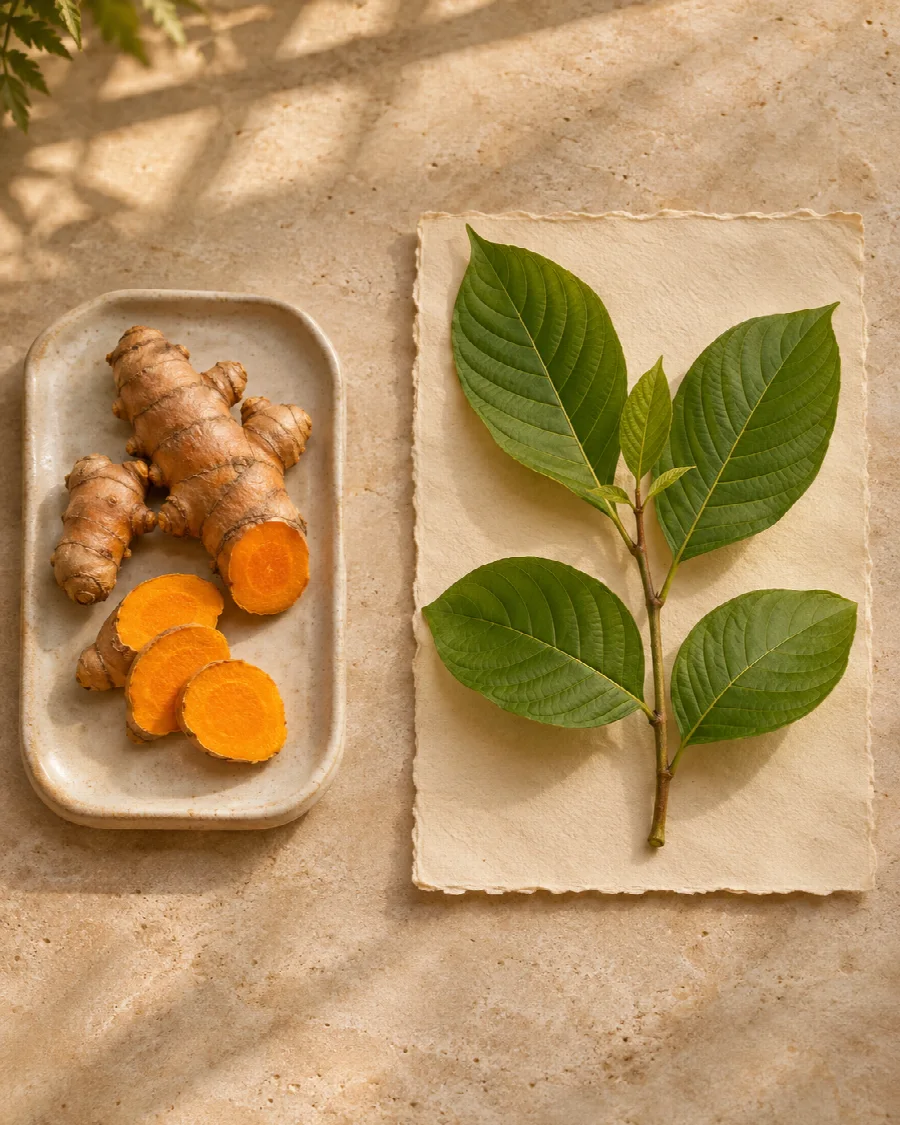
NIH reports liver injury in some people who took curcumin products formulated for higher absorption. The FDA warns that kratom can carry serious risks, including liver toxicity, seizures, and dependence. Human research has also found that kratom can affect how the body processes some medications. If you take medication, ask a pharmacist or clinician to review the ingredients before using herbal products. NIH turmeric safety information · FDA kratom safety information · Human study on kratom and drug interactions
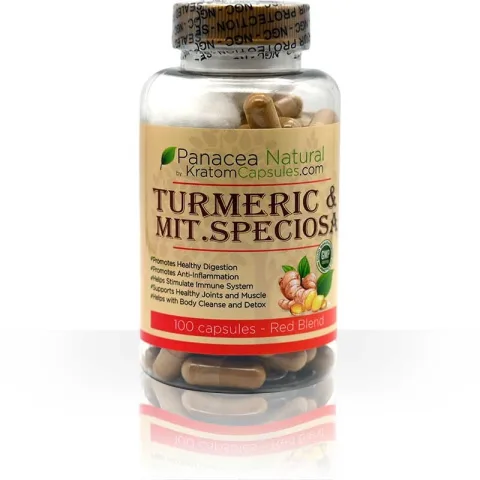
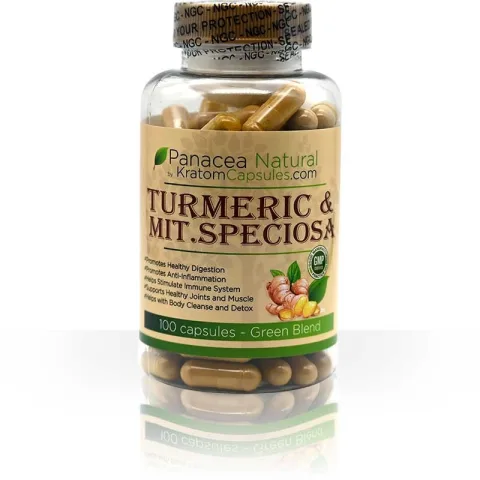
Panacea Natural’s turmeric and kratom blends
Panacea Natural lists two 100-capsule blends with turmeric extract. One uses red vein kratom and the other uses green vein kratom. Select a product photo to see its label and product details.